

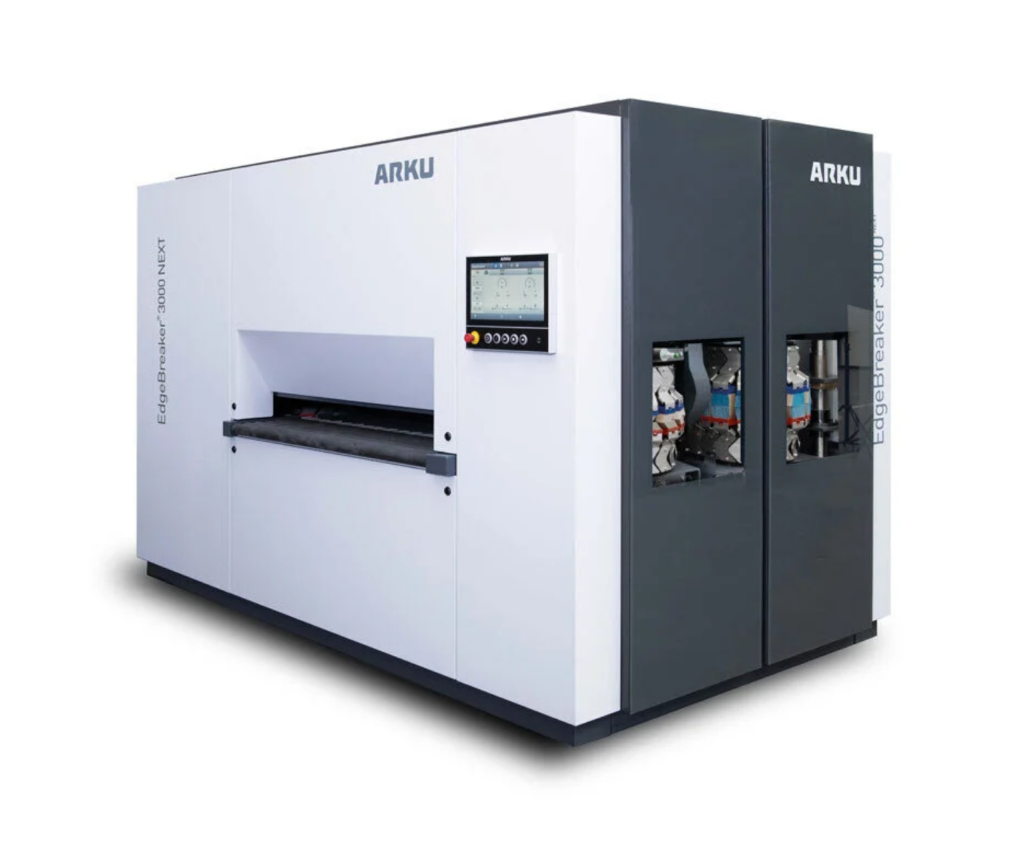
Apparently, the day began in alphabetical order. My first stop was the ARKU (Cincinnati) booth to check in with Denis Weinfurtner, Director of Marketing. I visited ARKU’s U.S. headquarters in Cincinnati not long ago to do an Under the Hood story on the new ARKU EdgeBreaker 3000 NEXT, which was featured at the booth. This machine breaks from the tradition of the EdgeBreaker 3000 in a few ways, but the foremost of these is in the drive mechanism. The NEXT version uses direct drive versus its predecessor’s chain drive. The result? Operation energy savings of up to 40%. There are extra safety measures (such as automatic shutoff if the material goes too far after exiting the machine, and two new features that help you install blocks quickly—and keep them there).
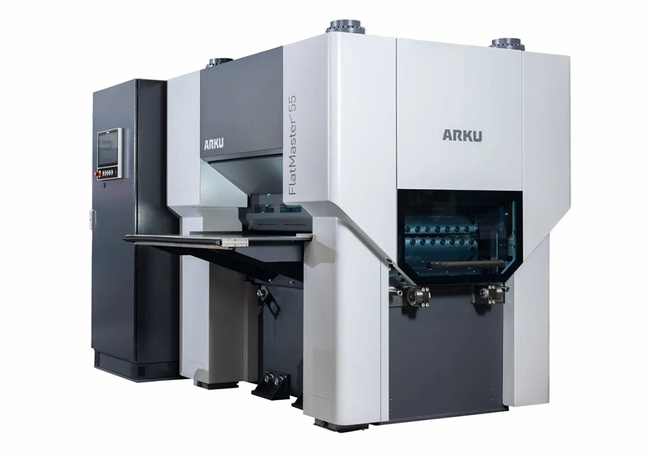
The company also had the FlatMaster 55 at the show. This machine performs leveling and stress relief for a wide range of thicknesses that straddles sheet metal and plate, from 0.02 in. to 0.60 in. According the ARKU, this model performs well in markets such as machinery construction, contract manufacturing, vehicle production, and agricultural equipment manufacturing.
While ARKU’s separate booths are not a new marketing strategy, this year the displays were right across the aisle from one another—more than the sum of its parts, one might say.
The first press conference: Bystronic
Bystronic (Hoffman Estates, IL) had its traditional first-day press conference, two hours earlier than usual which worked well for all involved. The booth was packed with technology and products; we will look at four in particular.
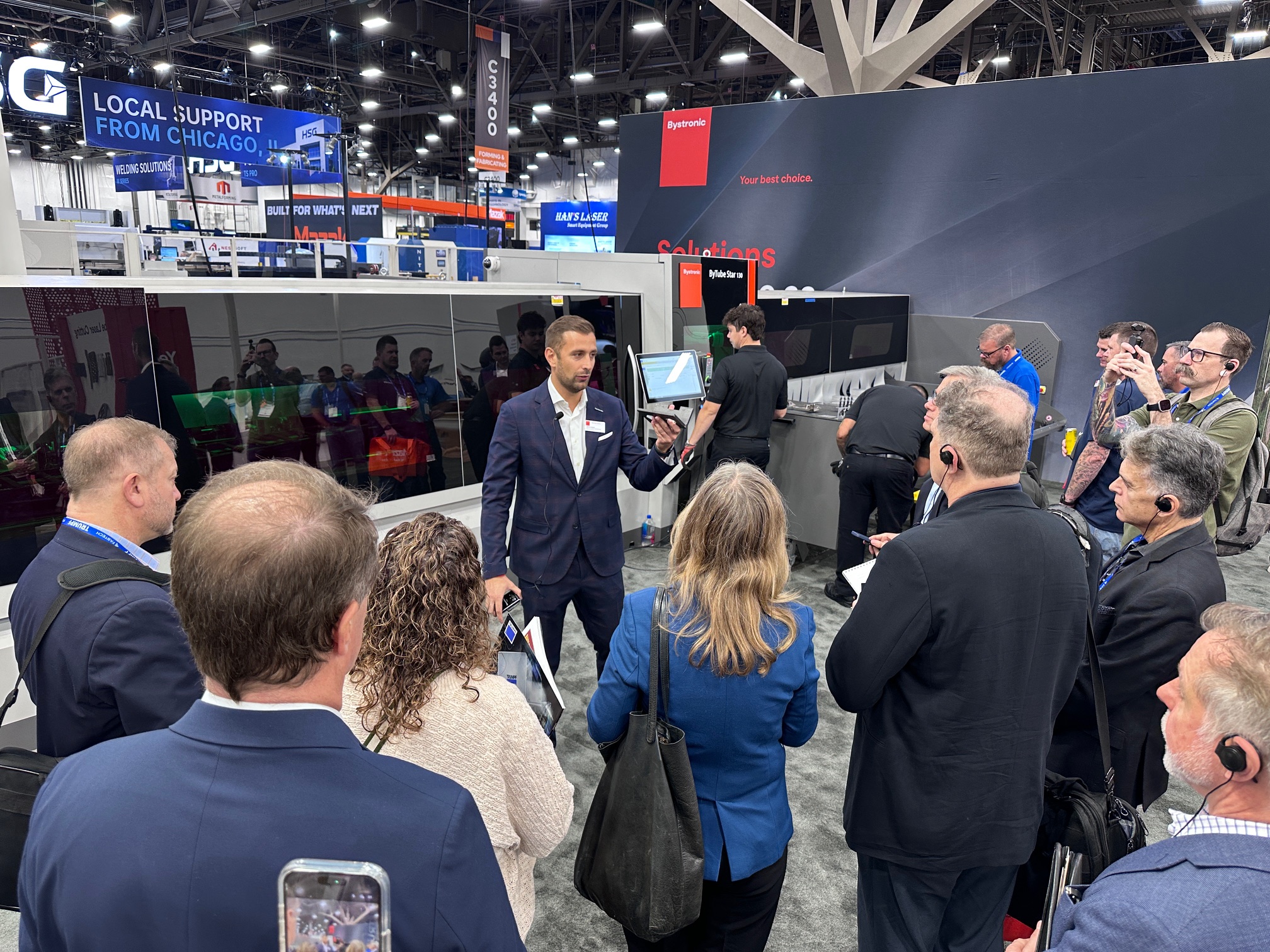
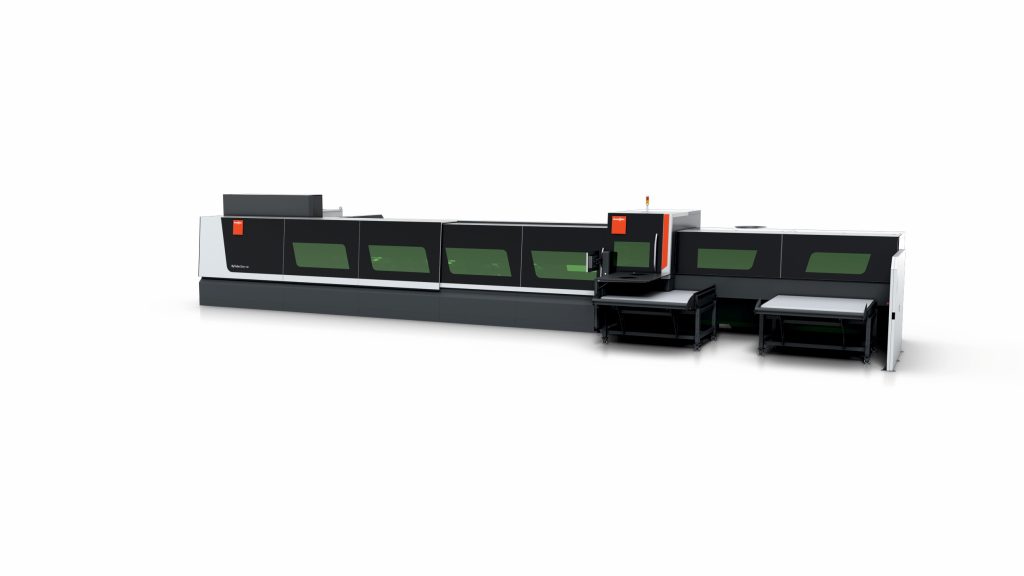
With 4 kW of laser power, the By Tube Star 130 handles tubes and profiles from 0.39 in. to 5.12 in., and lengths up to 28 ft. Shapes including round, square, rectangular, open, and elliptical sections are accommodated. One of the key advantages to this machine is that when you switch between jobs, even differently-shaped jobs, the machine adjusts automatically. Yes, the cutting is faster but the real payoff in time is located between jobs. Manual changeovers can take a significant amount of time, and this tube cutter addresses that challenge.
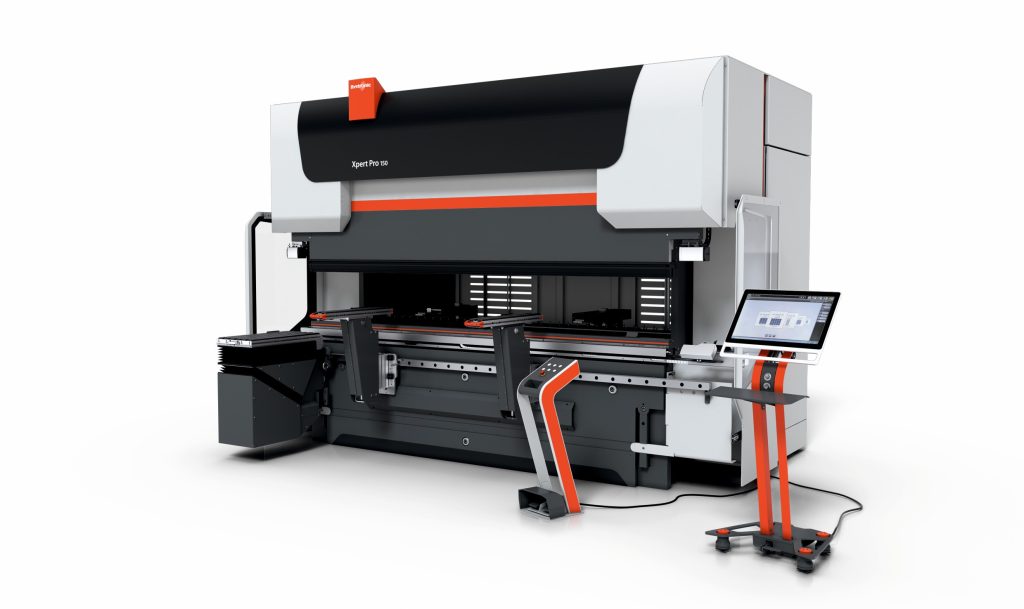
The Xpert Pro press brake family is designed to do everything from one-off prototypes to volume production work. It’s available in three capacities—110 to 350 U.S. tons—and bending lengths from 10.1 to 13.4 ft. Options like the Laser Angle Measuring System (LAMS) make it easier to achieve consistent results without manual adjustments. This series gives shop owners a lot of options around tooling. You can choose a specific back gauge, tooling type, and tool clamping system. The open tool clamping system even works with tooling from other providers, allowing fabricators to make use of existing investments.
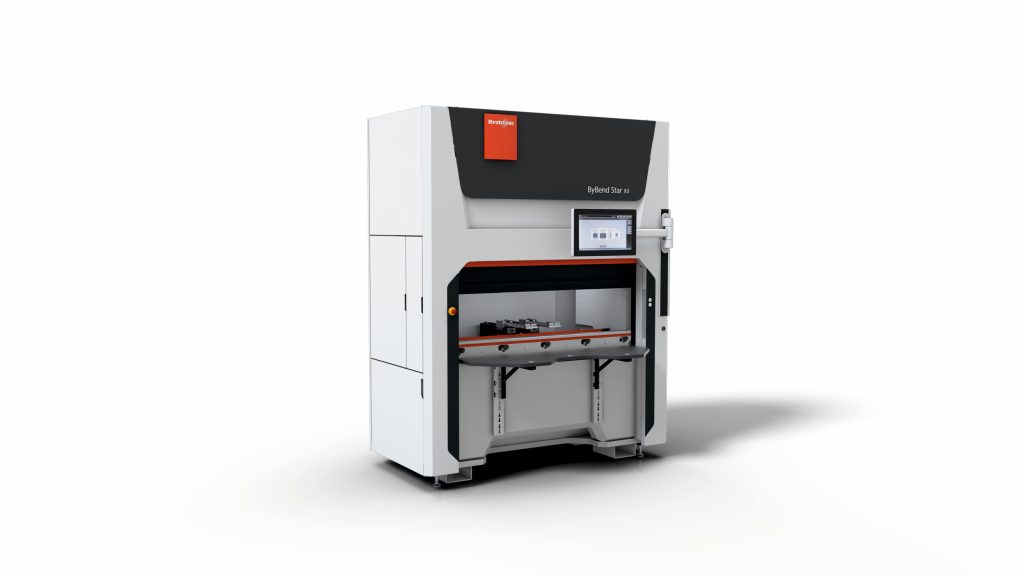
While we’re on the bending topic, the company showed its small- to medium-sized bending solution: the ByBend Star 80. It’s an interesting market entry. Bystronic was one of the first companies to deliver the “phone booth” sized press brakes, but this one’s a bit bigger. The ByBend Star 80 has that convenience and more; 65 square feet delivers the speeds of today but is compact enough for small spaces. The machine is quite easy to move; its compact design allows you to put it wherever it is needed most on any particular day. Bystronic’s Plug and Bend design, according to the company, means it’s ready to go in five minutes.
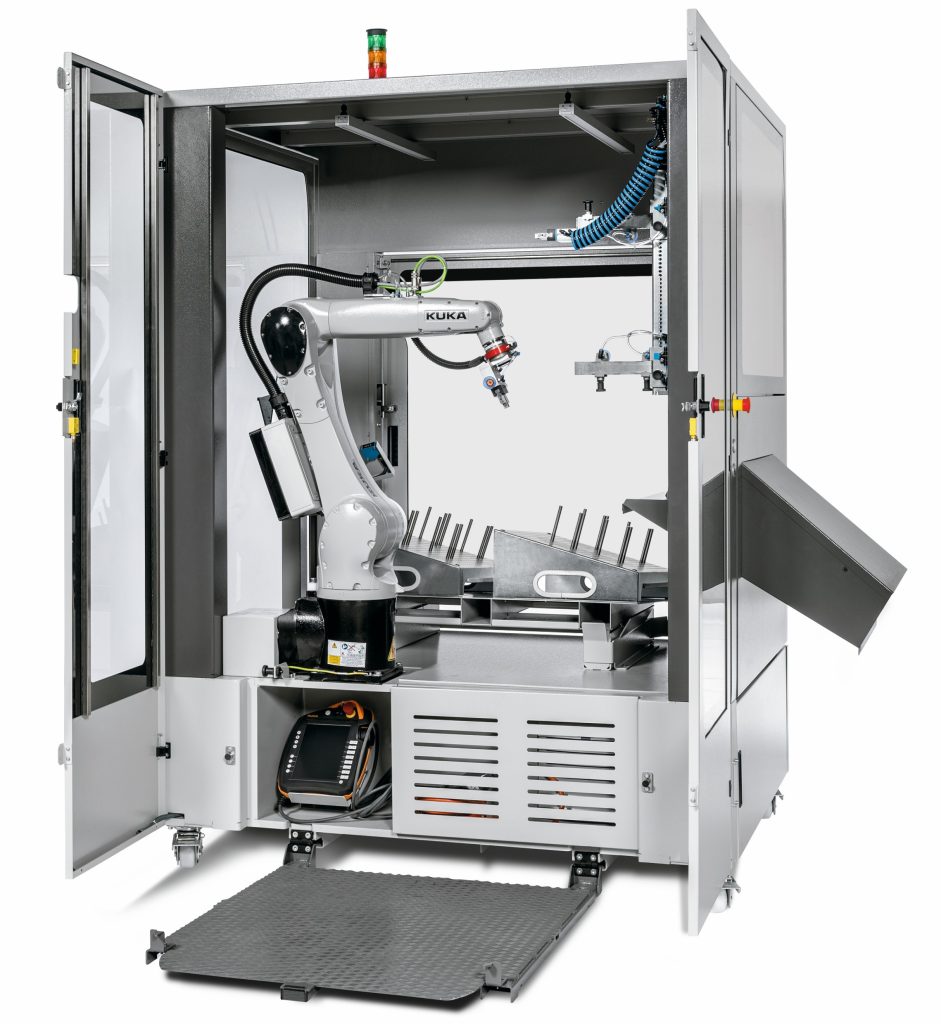
Next, think of a robot companion to the ByBend Star 80, and you have the Mobile Bending Cell that brings robotic automation to this press brake. The robotic cell offers a six-axis robot, a compact design, and a case that has casters. Roll it in front of the press brake, and it connects and automatically aligns itself within 10 minutes. When it’s finished with its task, roll it out of the way.
This robot likes surface treatment
Jumping to the L’s, I visited Lissmac (Mechanicville, NY) and saw Ingo Heiland, who runs U.S. operations, next to a portable robot cell which was next to an SBM-XS 300. Ingo was joined by Lissmac partner Martin Magrian from Fruitcore Robotics (Konstanz, Germany). They were showing off Fruitcore’s implementation of an automated feeder for the deburring machine.
In this automation scenario, a camera was placed a few feet above a bin full of parts. By referencing the photo, the robotic arm moved the suction-type gripper to an area on the blank with no holes, transported the piece to a ramp, and turned off the suction. The piece slid down onto the SBM-XS 300’s feeder and went through the machine, coming out the lower end into another bin. This piece of automation frees a person from putting parts on a conveyor and gives them the ability to take on other, more career-building duties.
As a bonus, we checked out Lissmac’s new SMD 122 machine which has some interesting conveyor news: the left half of conveyor (as you look at the feed end) holds steel or really any ferrous metal to the belt because of magnets. If you have non-ferrous metals or composite materials, those can go on the right side, which has suction. Either way, the part stays in place while it’s getting processed.
The second press conference: TRUMPF Inc.
TRUMPF Inc. (Farmington, CT) Senior Vice President Burke Doar was once again on hand to welcome the media to the TRUMPF Inc. booth an hour before opening on the second day of the expo. Among other things, Doar covered three points: 1) how happy TRUMPF, Inc. was to be in Las Vegas to support customers; 2) the exciting technologies going into TRUMPF, Inc. products; and 3) the health of the company, also covered at the tail end of the press event by TRUMPF, Inc. President and CEO Lutz Labisch.
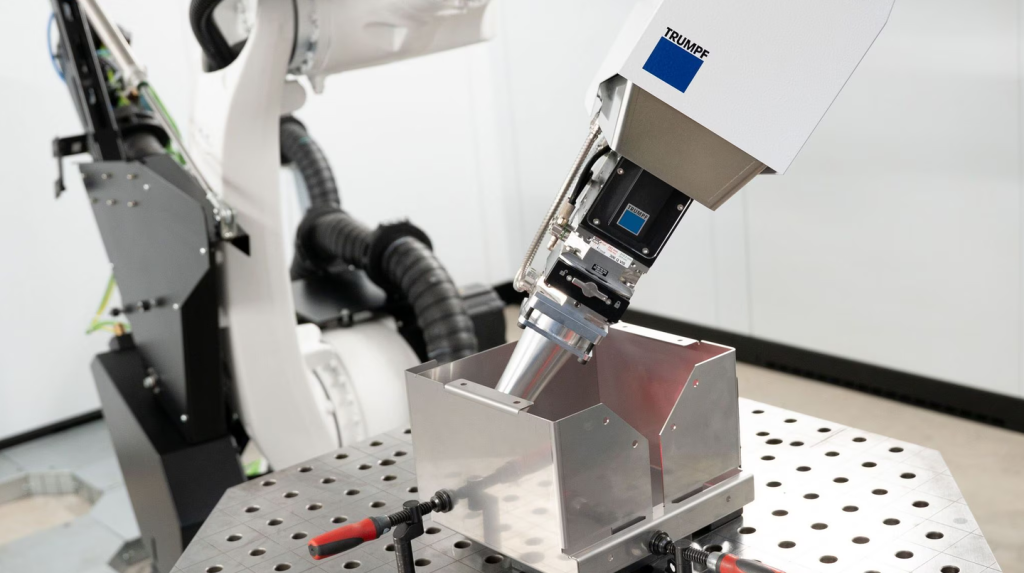
Let’s start with a product premiere: the TruLaser Weld 3000. Robin Stuhler, Welding Product Manager, was on had to do a demo of the new piece of equipment. If you remember the Under the Hood story on the TruLaser Weld 5000 (which starred Stuhler) you will note some differences when you look at the 3000 model. First, the entire enclosure is much more compact. Second, the nozzle and the whole assembly behind it are much narrower than its cousin’s. Therefore, jobs like welding on the inside of a metal box offer an enhancement worth considering. Third, new software helps bring new automation to the product. A touch-screen monitoring system allows you to show the target with the tip of your finger, and from that point the system accurately tracks.
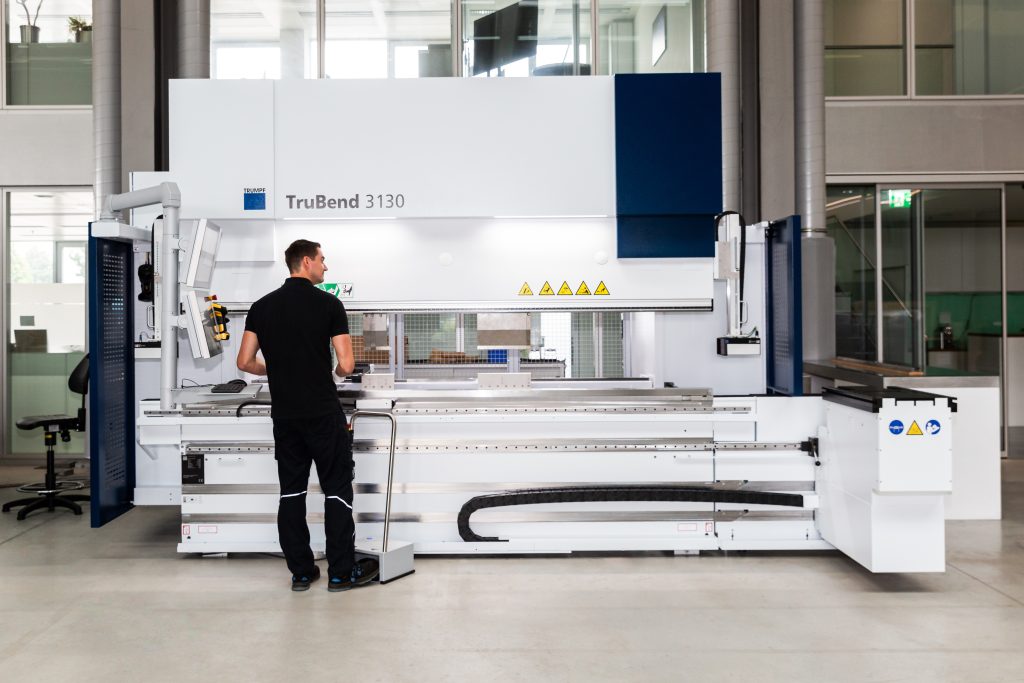
One of the interesting things about the TruBend 3000 is that it is manufactured at the SmartFactory in TRUMPF Inc.’s U.S. headquarters in Farmington, CT. More to the tasks at hand, it is a product that is a workhorse and a happy medium. Rated at 230 tons, capable of bending different parts in varying lot sizes. It optionally includes a 5-axis backgauge, which performs well in asymmetrical bends. The power comes from four hydraulic cylinders, which distribute the force more evenly across the press beam. Additionally, it is an on-demand power source, only delivering force when needed.
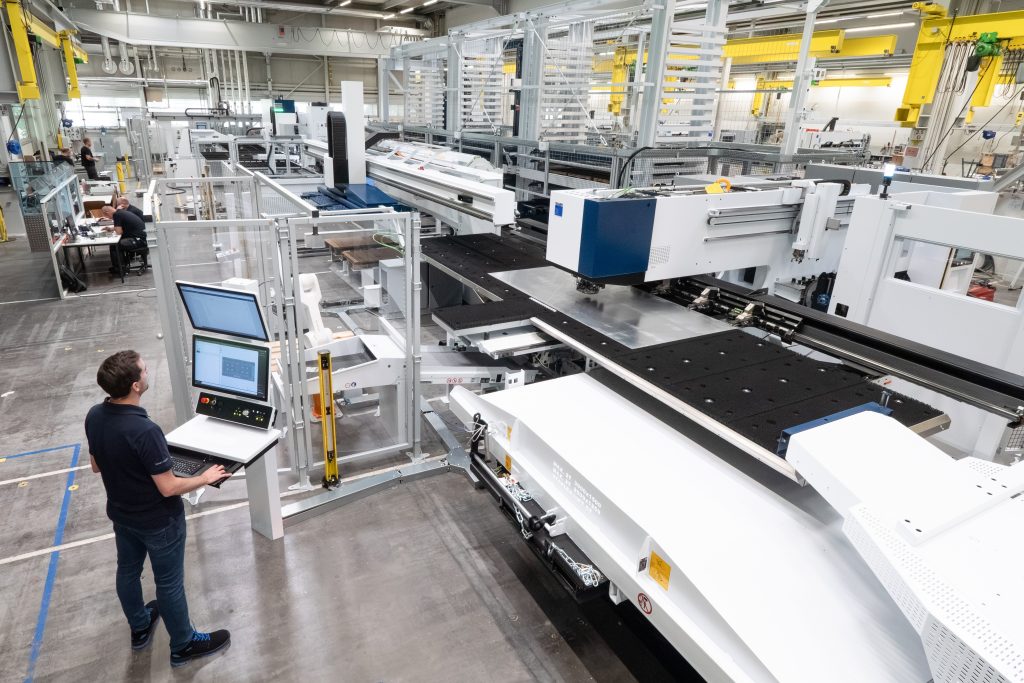
The most powerful punch in TRUMPF Inc.’s stable of products right now is the new TruPunch 5000. It features the fastest rotation of the C axis for tapping, and it can punch at a rate of 1,600 strokes per minute and mark parts at 2,800 strokes per minute. It is designed with a very open concept, meaning that automation equipment like the SheetMaster can approach and serve its material needs with ease. The punch sports a new control, a second screen, and a vision system that shows the user information about current actions in the machine.
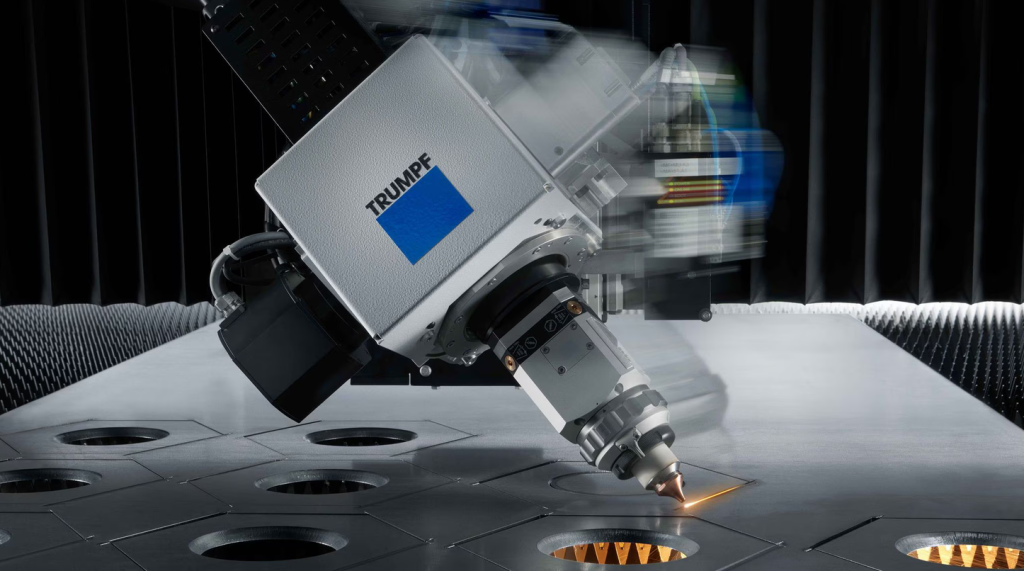
The TruLaser 3040 is full of branded technologies from TRUMPF. To wit:
- The TruFiber solid-state laser lets you cut steel and non-ferrous metals, and is available in powers up to 24 kW;
- BrightLine fiber helps with edge quality and part removal;
- CoolLine allows you to create small contours in thick mild steel, without sending the cutting head on long journeys to let a cutting area cool down;
- Drop&Cut allows you to drop a remnant piece on the cutting bed and fit a part to the remnant;
- DetectLine knows the position of the sheet and assists the precision of the cut; and
- Other options to help the process along.
The TruFiber has applications in both laser cutting and welding, and is available in many different builds for many different situations.
Making nests with PEP
If you still use older software to make nests for laser cutting, or if nesting is treated as its own separate entity, then you should probably check out solutions from PEP Technology (Irvine, CA). The company has extensive experience and expertise in the world of nesting, but it treats nesting as a part (albeit a very important part) of the process from both a production and business point of view. The nesting is amazing and automatic, but that is not the only product PEP Technology offers:
- ERP system interfaces;
- Inventory management;
- “Common” or shared-kerf cutting;
- Punching software
- Plasma/gas software
- Automated job scheduling
- Job quoting
The best way I could think of to show the nesting and how it works within a business was to get a video of it happening and have a tour guide (in this case, it was the company’s Applications Engineer, Justin Heiland). It’s an excellent and thorough introduction to PEP Technology’s offerings and a very interesting topic.
Watching a METEOR
For more than a decade I have known Ahmet Ceylan, the Global Branches Operations Manager for Akyapak. We have had meals together, talked about fabricating, world politics, and our respective families. At this most recent FABTECH we were all about fabricating—I wanted to get some footage of the METEOR, a single spindle drill line. That description is accurate but perhaps doesn’t give you the full picture. It sub axis approach means it can move the drill 250 mm without moving the entire drive unit with it. It also does marking, milling, countersinking, and tapping. It’s fast and easy to operate, and we have video to prove it—take a look.
One last item: another Turkish friend, Mesut Akyapak, now runs the U.S. efforts. He returns to the family business after leadership positions at Bursa companies Bekamak, Nukon, and UZMA—all of which share the same region of Bursa called Nilüfer. That’s also the home to Mesut’s alma mater, Bursa Uludağ Üniversitesi, as well as Akyapak itself.
Holy spanakopita!
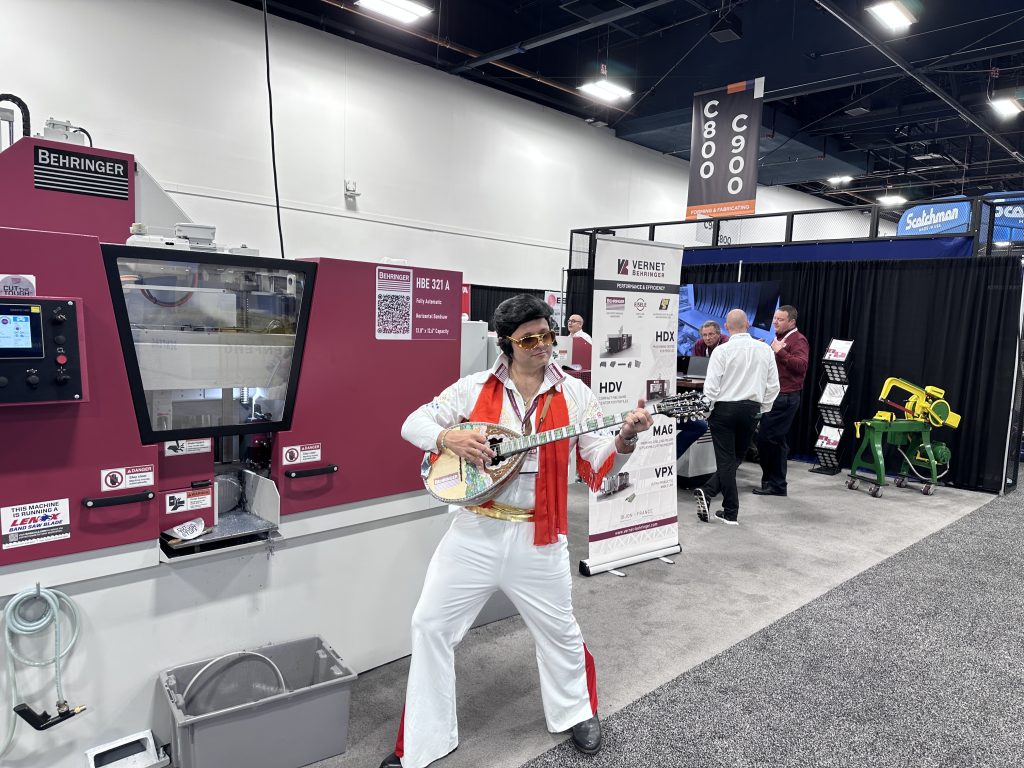
As I came around a corner to the Behringer booth, I came across a man dressed as Elvis. Due to my youthful experience in a Greek wedding band (I am not Greek, and yes, I stood out like a sore thumb) I knew that Elvis never appeared with such an instrument onstage nor starred in a movie called “Viva Thessaloniki!”
Only in Las Vegas!